Shooting in the Dark at Screamfest 2025
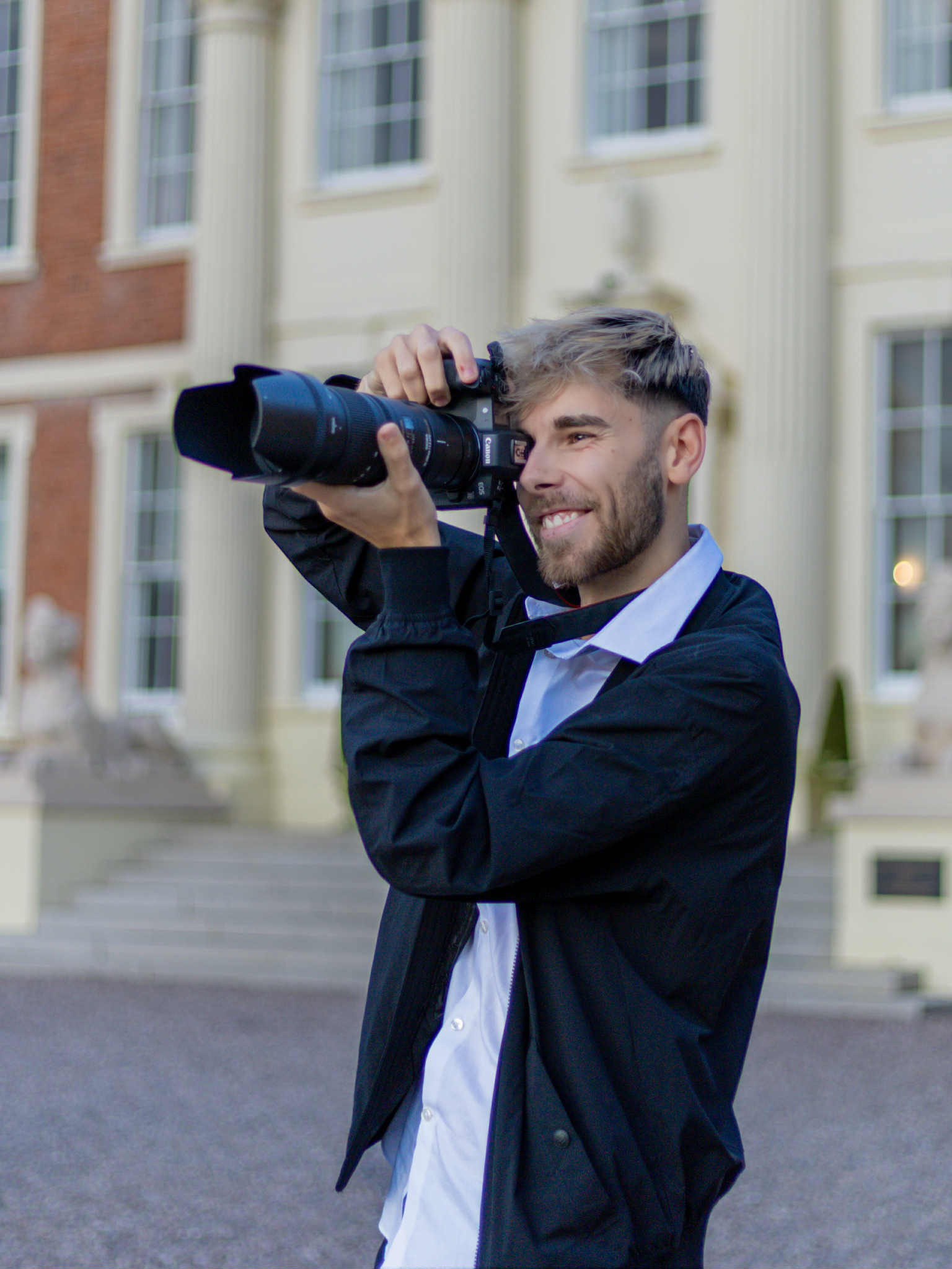
This week I was invited to shoot for Screamfest at the National Forest Adventure Farm in Burton upon Trent, and honestly, what a night. For anyone who’s never been, Screamfest is one of the Midlands’ biggest Halloween attractions — full of haunted mazes, live actors, special effects, and the kind of atmosphere that makes you laugh, scream, and jump all at once. It’s an incredible event, and a must-go for any thrill-seeker (or anyone who secretly enjoys being terrified).
Sometimes, as a new photographer, it’s really easy to feel a bit like an imposter. I’ve always been fairly confident — maybe too confident — so I figured I could talk my way into a few interesting places. But when I arrived at Screamfest 2025, just a couple of months into my photography journey, I’ll admit I felt a little lost.
It’s easy to forget that when people see someone in a high-vis with a camera, they don’t know anything about you. To them, you’re just the person with the camera. My experience? My ability? Meaningless. Embodying the confidence of a photographer with 10+ years of experience is great fun… until you hit that brick wall that brings you right back down to earth.
The Challenge: Shooting in the Dark
Photographers have always known that photography is all about light. Even Louis Daguerre, one of the early pioneers of photography, had to expose his first landscapes for 5–15 minutes just to capture enough of it.
I’ve spent hours learning and probably a hundred times more practicing how light works in photography — but Screamfest presented me with a challenge I hadn’t truly faced before: What do you do when you’re shooting in near darkness, with fast-moving subjects, and you can’t use flash or additional lighting?
At first, it felt impossible. Honestly, if I hadn’t been there for a client, I might’ve packed up. But I had a job to do, so I found my way through it.
Here’s What I Learned That Night
Find the highest ISO you can live with. This comes down partly to how you like to edit your photos and partly to your camera and lens. My weapon of choice that day was a Canon EOS R with a lens that opened to f/2.8. For me, the highest ISO I was comfortable shooting at was 8000 — bright enough for my camera to lock focus, but not so high that the images were completely filled with noise.
Open up that aperture. I opened my lens to its widest aperture. That was a tough call. At an event like Screamfest which has lots of movement, aperture choice has trade-offs. The wider I go, the more light I let in, but the shallower my depth of field becomes. If I narrow the aperture, I get more in focus, but lose light, making the image darker. In the end, I opened my lens as wide as possible — at that point, light mattered more than depth of field.
Play with shutter speed. Initially, getting my shutter speed down to 1/50 gave me a really nicely exposed image, problem solved right? Wrong. The perk of an event like this is that there is so much going on. Usually, given enough light I would want to be shooting at 1/1000 at MINIMUM so I can capture all the action really cleanly. That was not an option at 8pm in October. I don’t think I settled on a number all night, but experimentation is key. Figure out how you want you image to look, and understand your editing capabilities.
Use whatever light you can find. At Screamfest, every light source became my best friend — neon signs, fire pits, food trucks, even glow sticks. You can’t always control the light, but you can control how you use it. Get close to whatever light you find, turn to face away, and use it like an artificial flash.
By the end of the night, I was cold, exhausted, and had a few photos that I was genuinely proud of. Screamfest pushed me harder than I expected — technically, creatively, and mentally. Here are some of my favourite shots:
I learned that photography isn’t just about your settings or your gear — it’s about problem-solving, patience, and adaptability. You don’t always get the perfect conditions.
Sometimes you just get thrown into the dark (literally), and you have to make it work.
For anyone else early in their photography journey, especially if you’re building your craft here in the Midlands or Derbyshire, don’t shy away from tough shoots. They’re the ones that teach you the most.

Comments